

When it comes to making that perfect cup of coffee, many will tell you that using freshly ground beans is key. This is due to the fact that once coffee is ground, it can stale rapidly so it is always advisable to grind each time you brew to ensure that the beans are as fresh as it can be.
This brings us to the matter of buying a coffee grinder which is actually not as straightforward as you may think.
Basically, there are two types of coffee grinders: blade grinders and burr grinders.
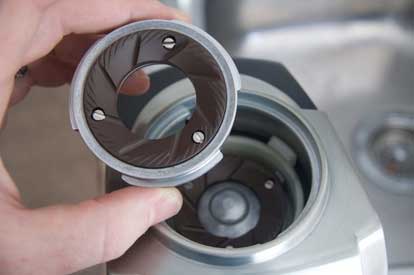
Blade grinders are generally considered to be the least inexpensive of the lot. As the name suggests, it uses a blade to cut up coffee beans. The propelling blades pretty much slice, tear, and smash the coffee beans into smaller bits. You can probably imagine how this would result in an inconsistent grind, which would, in turn, give rise to less consistency in the drink quality.
To say nothing ot the heat generated by the rapidly revolving blades and how it could affect the taste. So mjuch so that it could potentially burn the coffee.
But that's not to say that blade grinders are ineffective in its task, it just delivers the performance you would expect for buying something at a budget. Having said that, it is still a cut above pre-ground coffee.
These machines are also relatively noisy compared to the other types of grinders.
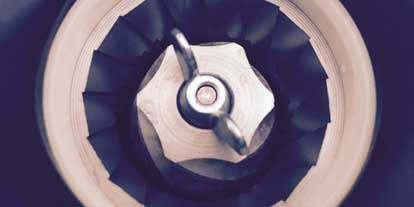
Burr grinders are known to provide a more precise grinding. They come in two variations, namely flat burr grinders and conical burr grinders. These grinders work by crushing the coffee beans against a static surface with a grinder wheel. Additionally, it allows one to set the coarseness or fineness of the coffee grounds by adjusting the position of the burr.
Wheel burr grinders consists of two identical flat plates sitting on top of one another. When whole beans are fed into the grinder, they are grabbed by the inner teeth and forced through to the outside of the burrs, where the teeth are more frequent and precise.
On the other hand, conical burrs have two cone-shaped plates that fit within one another and sit horizontally in the grinder. As the center burr spins, the sharp edges pull whole beans into the grinding area, where they are broken down into smaller and smaller pieces. Such a burr shape allows a fairly uniform grinding with a high level of grind size control.
Due to its shape, this allows coffee beans to be ground at a lower-rpm and results in less noise and heat. In this regard, the flat type can be louder than the conical type.
At this point, you will most likely think of the conical burr grinder as superior, but hold on.
With conical burrs, you will get a bimodal distribution of coffee grounds wherein if you were to place the coffee grounds under a microscope, there would be two distinct sets of particle sizes: small and large. On the contrary, flat burrs will produce a unimodal distribution of coffee grounds.
Without getting too much into the technicalities, the even particle distribution from a flat burr grinder allows a barista to pull espresso shots all over the board. They can either pull a classic, gritty and thick shot or a longer, brighter and sweeter shot. In comparison, the grounds from conical burrs can only produce the stereotypical shot of espresso.
Despite all that, flat burr grinders usually cost less than the conical burr ones.
There is no definitive answer on which type to choose as it is all a matter of preference. If you are someone who is just getting started to appreciate freshly-ground beans, then blade grinders are a good entry-level choice. If you are very particular about your coffee, a conical burr grinder would be your best choice. However, if price is a concern, then you would do well to buy the best quality flat burr grinder that you can afford.